Will AI Replace Human Therapists
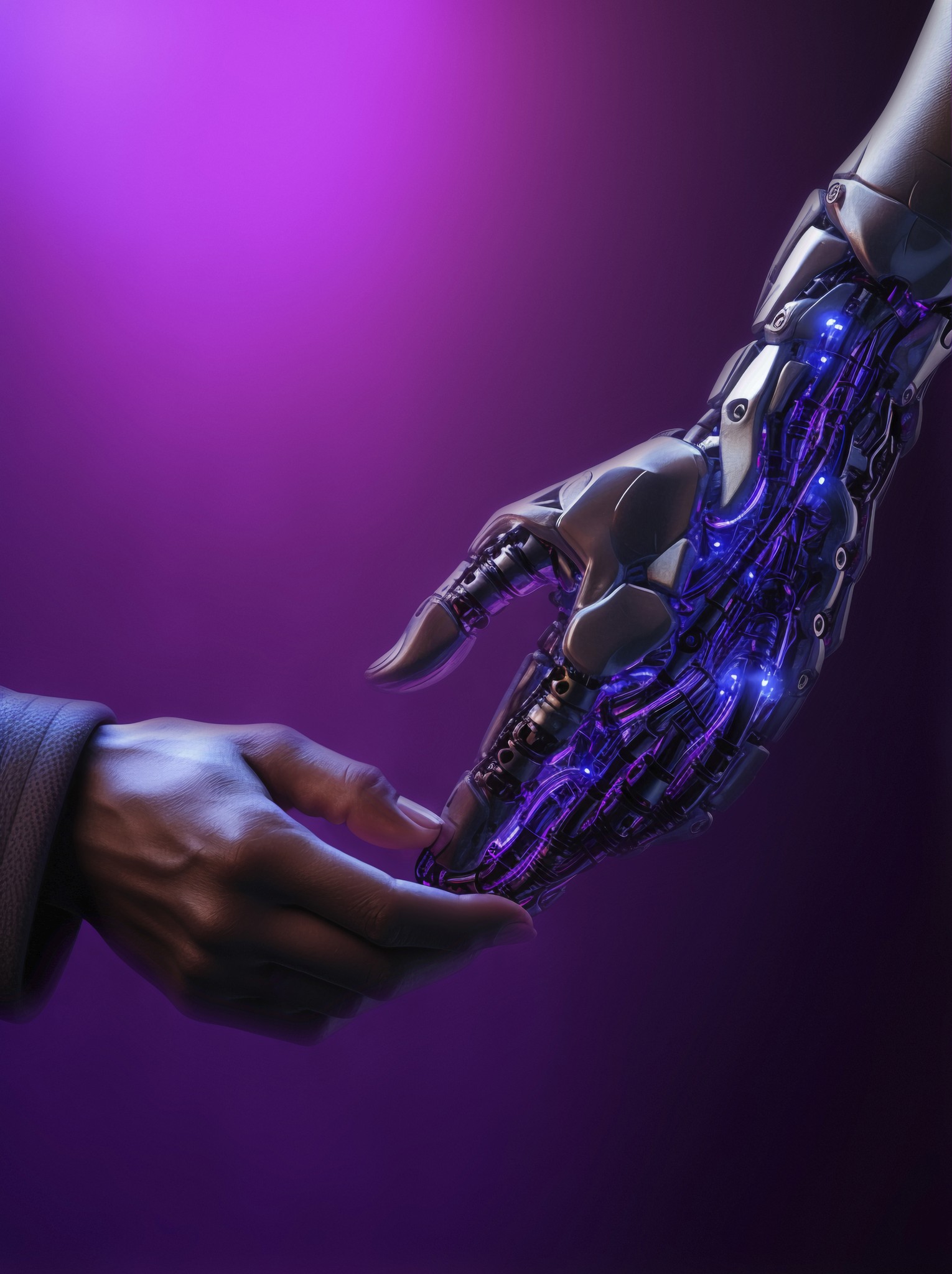
The Future of Therapy Is AI: Empowering Clients, Supporting Therapists
Artificial Intelligence (AI) is becoming part of almost every area of life—including mental health. This raises an important question: Will AI eventually take over the role of human therapists?
There’s no doubt that AI has clear benefits.
Therapy can be expensive, and not everyone can afford it. It also takes time- You may need to travel or miss work to attend sessions.
AI removes some of these barriers.
You can access it anytime. You can use it from anywhere. This makes support easier to reach.
AI is also a great tool for psychoeducation. It can help you understand your thoughts, emotions, and behavior. This can help you manage stress, anxiety, or habits better. As people gain knowledge through AI, they may begin to self-train and manage certain challenges on their own.
AI chatbots can be designed to use evidence-based therapeutic approaches, such as:
Cognitive Behavioral Therapy (CBT) – helping users identify and change negative thought patterns. They guide users through identifying negative thought patterns, reframing them, and practicing coping strategies.
This mimics the flow of a therapy session, but in a digital, self-paced format.
Solution-Focused Therapy – focusing on goals and practical solutions
Psychoeducation – teaching mental health concepts and coping strategies. Chatbots can teach mental health concepts (stress management, mindfulness, habit change).
They provide exercises, reflections, and daily prompts—similar to what a therapist might assign as “homework.”
Mindfulness-Based Approaches – guiding users through grounding and awareness exercises
Motivational Interviewing (basic level) – encouraging behavior change through guided questions. Chatbots can help users explore ambivalence and set goals.
This supports behavior change in areas like smoking cessation, exercise, or diet.
There is also another reason some people prefer AI.
Some people find it hard to open up to another person. Sharing deep fears, shame, or personal struggles can feel uncomfortable. There may be fear of judgment or being misunderstood.
AI can feel easier.
You may feel more free to speak honestly. You may say things you would not say out loud to another person. For some people, AI becomes a starting point where they can express themselves without pressure.
But AI still has limits.
Despite its benefits, AI cannot fully replace human therapists:
Lack of human connection: Therapy is not just about information—it involves empathy, emotional presence, and human understanding.
Complex cases: Severe mental health conditions and crises require personalized, professional care that AI cannot safely provide.
Ethical concerns: Confidentiality, safety, and proper guidance must be carefully managed.
Scope: AI is best suited for talk-based support and guidance, not clinical psychological treatment.
So, will AI replace therapists?
Probably not completely.
The Future of Therapy
Human interaction is changing. Many people now rely more on digital tools and less on face to face connection.
Just as machines replaced many forms of manual work because they were easier and more convenient, AI is becoming a normal part of how people seek support. Some turn to AI because it is fast, private, and always available. For others, it feels easier to open up without fear of judgment.
A Practical Model for Integration
Therapists can integrate AI chatbots into their practice in several ways:
Intake & Screening:
Chatbots collect client concerns and standardized assessments before sessions.
This saves therapists time, provides structured data, and helps clients reflect before the session.
Between-Session Support:
AI guides clients through CBT exercises, mindfulness practices, or journaling prompts.
Clients log emotions daily with AI prompts, creating a record therapists can review.
This keeps clients engaged and practicing skills outside of therapy, improving outcomes.
Therapist Dashboard:
AI aggregates client progress (mood trends, coping strategy usage, engagement levels).
Flags concerning patterns (e.g: sudden drop in mood scores) for therapist review.
Therapists gain a clearer picture of client progress without extra manual tracking.
Session Enhancement:
AI summarizes client activity since the last session, highlighting key themes.
Therapists use AI insights to tailor interventions more precisely.
Sessions become more focused, efficient, and responsive to client needs.
Post-Therapy Maintenance:
AI provides ongoing psychoeducation, reminders, and coping strategies after therapy ends.
Clients can check in with AI for early signs of distress and be guided back to professional care if needed.
Extends the therapist’s impact beyond formal sessions.
This hybrid model ensures clients receive continuous, personalized support while therapists focus on deeper, complex care.
Conclusion
AI will not replace human therapists- it will become a useful tool in therapy. It will support learning, early help, and accessibility. Human therapists will continue to provide deeper care and healing.
In short: AI will change therapy the way calculators changed math. They didn’t replace mathematicians- they made math more accessible and freed humans to focus on deeper, creative problem-solving. Therapists will remain irreplaceable, but AI will expand the reach and impact of mental health care.
It’s time for therapists to embrace AI- not as competition, but as collaboration. Chatbots and digital tools can enhance the client experience, making support more immediate, personalized, and engaging.
This isn’t about what we as therapists consider best for our practice- it’s about what gives clients the best experience, the most accessible support, and the tools they need to thrive.
The future of therapy is hybrid. The question is not if AI will fit into practice, but how. Will you use it as a companion alongside therapy, or as a gateway to deeper care?
AI is becoming part of almost every area of life- including mental health. This raises an important question: Will AI eventually take over the role of human therapists?
The Benefits of AI
Therapy can be expensive and time-consuming. AI removes barriers by being accessible anytime, anywhere.
AI is a powerful tool for psychoeducation, helping people understand thoughts, emotions, and behaviors.
It can guide evidence-based approaches like CBT, mindfulness, and motivational interviewing.
For some, AI feels easier to open up to- free from fear of judgment.
The Limits of AI
Therapy is not just information- it’s empathy, human connection, and presence.
Complex cases and crises require professional judgment.
Ethical concerns around confidentiality and safety must be carefully managed.
AI is best suited for talk-based support, not clinical treatment.
The Future of Therapy
AI is unlikely to replace therapists. Instead, it will:
Support therapists in their work.
Increase access to mental health care.
Act as a first step before seeing a professional.
Conclusion
AI will not replace human therapists- it will become a useful tool in therapy. It will support learning, early help, and accessibility. Human therapists will continue to provide deeper care and healing.
In short, AI will change therapy the way calculators changed math. They didn’t replace mathematicians- they made math more accessible and freed humans to focus on deeper, creative problem-solving. Therapists will remain irreplaceable, but AI will expand the reach and impact of mental health care.
It’s time for therapists to embrace AI- not as competition, but as collaboration. Chatbots and digital tools can enhance the client experience, making support more immediate, personalized, and engaging.
This isn’t about what we as therapists consider best for our practice- it’s about what gives clients the best experience, the most accessible support, and the tools they need to thrive.